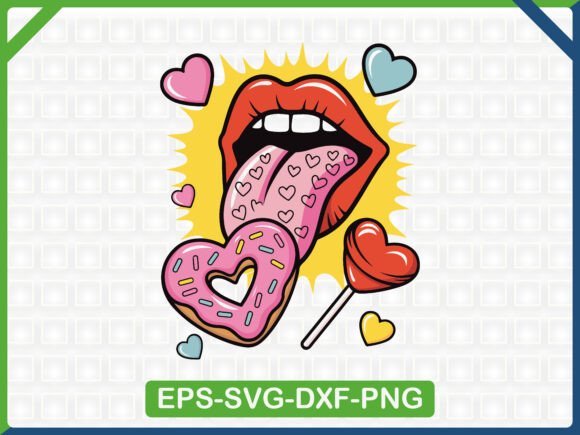
Love Donut Lips Clipart: Embroidery Project Review
Right out of the download, the Love Donut Lips Clipart lands with the kind of playful, slightly cheeky energy that makes a crafter start mentally pairing it with a plush pink thread. The composition blends a classic frosted donut with a glossy lip motif—think Valentine’s Day treats and flirty retro dessert vibes. It reads as one part sweet, one part sassy, and entirely shop-friendly for small brands. For embroidery designers, the first question isn’t just whether the graphic is cute—it’s whether those curvy lines, open centers, and facial details will translate cleanly into thread on fabric. The initial scan says yes, but not without careful planning.
What This Design Feels Like Before You Even Thread the Needle
The shape is round with a prominent donut hole, which immediately gives it strong central focus. The lip detail sits either inside the frosting or as part of the bite area, depending on the exact version you have. That central placement creates a natural focal point, which helps on apparel where you want the design to be eye-catching without spreading too wide. I’d peg the mood as lighthearted, conversation-starting, and clearly aimed at love-themed or friendship-based merchandise. It’s the kind of visual that works on a cozy sweatshirt, a girly tote, a makeup pouch, or a baby onesie for a cheeky baby shower present. There’s nothing overly intricate—no hairlines or dense shading—so embroidery potential is fairly open, provided the digitizer respects the gaps.
First Embroidery Test: A Kitchen Towel for a Bridal Shower Order
A recent custom order pushed me to test the Love Donut Lips Clipart on flour-sack cotton tea towels. The client wanted six matching towels for a bridal brunch gift, each with a small placement near the hem. I immediately noticed two things: the design needs size adaptation, and thread color choices can dramatically change the “bite” of the lips. On a 4x4 hoop, I had to simplify a few inner frosting drips that would have become muddy. I opted for a satin stitch outline around the donut base and light fill stitches in the frosting, picking a soft coral for the lips to contrast with a pale beige donut body. The result was crisp and instantly recognizable—exactly what handmade boutique items demand. The bride’s party loved the personalized touch, and the design survived a quick wash test without losing definition when stitched with a medium-weight cutaway stabilizer.
Stitching Strengths: Where Love Donut Lips Clipart Performs Confidently
In flat embroidery applications, this design behaves well because its shapes are generous. The circular silhouette sits naturally inside a hoop without awkward rotation angles. If you’re planning a machine embroidery design for a tote bag, the rounded form fills a front pocket area beautifully. I’ve seen it done as an appliqué too: a felt donut base with simplified frosting layers and the lip done in a glossy rayon thread. For custom apparel like crewnecks or unisex sweatshirts, pairing the design with a witty phrase underneath (even just “Love”) gives it retail punch. That’s a pattern I notice among successful Etsy sellers—they combine this exact clipart style with short text to create giftable, easy-to-list products.
Versatility Across Product Categories
- Tote bags: Sits perfectly centered on canvas; holds up to regular handling if using dense stitch areas and quality backing.
- Sweatshirts: Works on the chest or sleeve; the playful lips soften an otherwise plain hoodie and invite conversation.
- Baby onesies: Scaled down, the soft contours avoid harsh edges; just steer clear of metallic lip threads against delicate skin.
- Kitchen linens: Aprons and tea towels respond well; just ensure you test thread fastness with frequent laundering.
- Embroidered patches: With a clean merrowed edge or a raw stitched border, the donut-lip combo makes a cheerful badge for jean jackets or backpacks.
Careful Corners: Hoop Sizes, Fabric Types, and Detail Trade-Offs
This isn’t a one-size-fits-all stitch file. The Love Donut Lips Clipart runs into trouble when you try to cram it into a 3-inch hoop—small lip details start bleeding together, and the donut hole can close up with even moderate stitch density. I’d recommend nothing under 4x4 for a standalone patch, but ideally a 5x7 field to keep breathing room. On textured fabrics like terry cloth or waffle weave, the fine lip outline can get lost; using a water-soluble topping helps dramatically. Stretchy fabrics, like thin jersey, demand a reliable no-show mesh stabilizer to stop puckering around the donut’s outer ring. Also watch dark fabric backgrounds: the chocolate donut or brightly colored lips will need an underlay, or the colors will dull after pressing. Always test on a like-fabric swatch before committing to a full run of finished products.
Digitizing Decisions That Make or Break This Graphic
Since the product comes as a Graphics file primarily marketed for T-Shirt Designs and prints, you’re probably going to convert it yourself or send it to a digitizer. That means you have full control—but also full responsibility—over how it stitches. I’ve found that preserving the lip’s highlight requires either a tiny satin stitch for the shine or leaving a fabric gap. Full fill stitch coverage of the lips without that shine area turns them flat and less dimensional. The frosting drips often tempt a designer to use dense tatami fills, but I’d run a lighter density and let the underlying fabric add texture unless you’re after a rigid patch feel. For commercial embroidery machines, watch the trims: if those drips overlap the base donut body, you’ll rack up trims fast, which slows production. Sequencing them as integrated objects rather than separate appliqué layers will cut stitching time.
Color, Contrast, and the Customer’s First Glance
The way you color this design shapes its market. A pastel pink donut with red lips reads rom-com cute; a chocolate brown donut with berry lips feels more bakeshop grunge. Test your thread palette under bright white light and incandescent warmth—the lip color can shift alarmingly and lose its pop. For printable mockups or digital embroidery file previews, I always generate both a light-background and dark-background stitch simulation. That small step makes my Etsy seller listings feel honest and builds buyer trust. In handmade product photography, the stitched version photographs easily because the round composition frames itself well against folded items.
Project Notes for Small Shops and Craft Businesses
If you’re building a collection around love, sweets, or quirky holiday gifts, the Love Donut Lips Clipart slots in nicely. I’ve seen it bundled in multi-pack “Valentine’s Day embroidery designs” listings, and it regularly sells as a standalone when marketed to bakeries or lipstick brands wanting promotional custom caps. When using it on items headed to a craft fair, consider adding a light running stitch shadow outline to boost definition on textured fabrics like canvas tote bags. For personal use—like making a single pillow cover for a friend—the pressure is lower, but I still recommend a test sew. No one wants a wonky lip on a gift that’s meant to be adorable.
Pre-Stitch Checklist
- Confirm the final design dimensions fit your largest comfortable hoop without distorting the donut hole.
- Select thread colors that contrast adequately with the background fabric—think of how the lips will read from two feet away.
- Check stitch density previews for the lip area; anything over 0.4mm spacing can turn glossy lips into corduroy.
- Test on a scrap of the actual project fabric with your intended stabilizer, then flex and wash the sample.
- If the license allows commercial embroidery output, maintain records of the original purchase and any attribution requirements.
Real-Life Fabric Performance: When to Proceed and When to Pin It
On sturdy woven substrates like cotton twill, denim, or canvas, this design genuinely thrives and feels like a professionally produced element. That’s where I’d direct you first for customer orders. Pillow covers with a linen blend also handle the shape well, giving it a slightly rustic bakery feel. Thin or drapey fabrics, like rayon challis or ultra-lightweight jerseys, demand more hoop-and-stabilizer finesse and can frustrate a beginner. If you’re new to embroidery, start with a tote bag design or a flat patch format. Once you’ve dialed in your settings, migrate to trickier apparel. Sweatshirt embroidery using this clipart works if you use a topping film; otherwise, the nap swallows fine lip detail.
Commercial Embroidery and Licensing Nuances
Since the product description mentions prints, t-shirts, mugs, and posters, the primary use case is flat printing. For commercial embroidery, you must verify whether the included license permits converting to a stitch file and selling the resulting physical items. Many digital design assets allow physical product sales but restrict reselling the digitized file. Read the fine print. If you plan to list the design as part of a custom apparel collection, stay inside license terms to protect your small shop product reputation. If the listing doesn’t clarify, contact the shop before producing inventory. Better to spend three minutes on a message than deal with a takedown later.
When Love Donut Lips Clipart Became a Bridesmaid’s Favorite
During the bridal tea towel project I mentioned, one of the towels ended up in the hands of a bridesmaid who also runs a small handmade beauty line. She immediately asked if I could recreate the design on a set of canvas makeup pouches for her brand’s launch. We swapped the classic donut colors for her logo’s palette and added a subtle fill stitch background. The playful lip element tied directly into her lip gloss product, making the design not just decoration but a subtle branding element. That kind of project shows how a graphic originally aimed at t-shirt designs can pivot into niche, profitable embroidery projects when approached with a designer’s eye.
Final Stitch Notes From the Workroom
The Love Donut Lips Clipart isn’t an instant push-and-stitch magic bullet, especially if you’re used to ready-made embroidery files. But as a digital source asset for custom machine embroidery design work, it provides a charming, clean starting point. Its strongest suit is emotional appeal: it makes people smile, which is exactly what personalized gifts and handmade products are supposed to do. From baby embroidery keepsakes to holiday embroidery gifts for Galentine’s Day, this graphic carries its weight when you match it with proper digitizing, the right stabilizer, and realistic expectations about scale. For craft business builders, it’s a low-risk addition to a seasonal lineup. Just stitch smart, respect the detail-to-size ratio, and let that glossy lip be the focal point—nothing competes with it. Your customers will notice the difference between a flat print and a dimensional stitched version, and that’s where your edge lies.